Bread-making in Italy: still a family thing

If you've ever been to Italy, you know that going to the bakery is just part of the day. Not a special occasion, not a weekend treat, but something people do every morning, the same way they make coffee. You pop in, grab a fresh loaf, maybe chat with the person behind the counter for a minute, and off you go. It's routine, what people call "La vita lenta" and it's one of those things that makes daily life in Italy feel genuinely good. Scroll down to read more about the art of bread-making in Italy!
Bread-Making here goes way back
Italy has been baking bread for centuries, and the craft has been passed down through families for generations. Most bakeries you'll walk into aren't chains or franchises: they're run by the same families who've been running them for decades, sometimes over a hundred years. The recipes change slowly if at all, and the knowledge is the kind that gets learned by doing, not by reading a manual.
And Italians really do go to the bakery every day. Fresh bread in the morning is non-negotiable for a lot of people. The smell of bread just out of the oven is something you never get tired of. It's one of those simple pleasures that's very easy to take for granted until you're somewhere that doesn't have it.

Chioggia: the little Venice
Before we get to the bakery, let's talk about where it is.
Chioggia sits at the southern tip of the Venetian lagoon, about an hour from Venice, and yes, people do call it "Little Venice." There are canals, bridges, colourful boats, narrow streets, historic palaces. But the real thing is that Chioggia is very much its own city, not just a smaller version of somewhere else. There's a strong fishing tradition and a local identity that locals are genuinely proud of.

Manfredi & Bullo: three generations in Chioggia
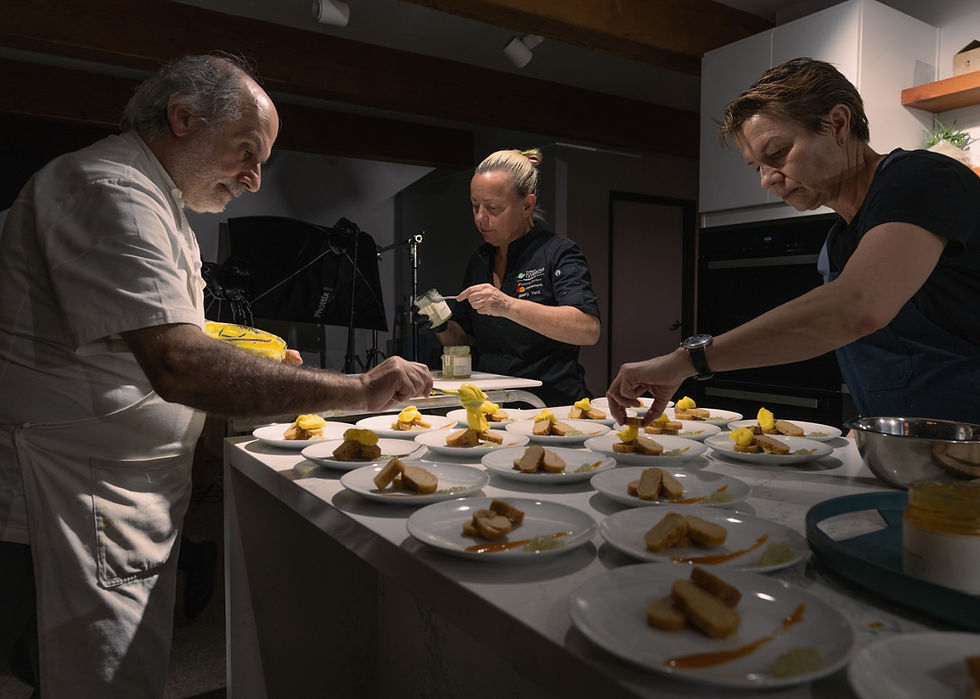
Here in Chioggia we visited Manfredi & Bullo, a bakery that's been going for three generations. A place with a strong local identity and a food culture to match.
This bakery uses only Italian ingredients, which is something they take seriously. Among their best-known products are their turmeric crackers, made with just five ingredients: water, salt, oil, yeast, and turmeric flour. That's it. They also make crackers with soy and barley, same approach, different flavour. They're the kind of thing you buy one bag of and then immediately want another.
It's a Bakery and a Cake Shop at the same time

One thing that often surprises people who aren't used to Italian bakeries is that they're rarely just about bread. Manfredi & Bullo is a good example: alongside all the bread and crackers, their oven also turns out proper cakes. There's the ciosota, a traditional local cake; a coconut and chocolate cake; an almond cake; and a ricotta cake. All of them made in-house, all of them worth trying.
So you go in planning to grab a mantovanina and you walk out with a cake too. It happens every time.
The Bossolà: Chioggia's own bread

Manfredi & Bullo also produces the bossolà, which is one of the most traditional products of Chioggia and something you won't really find anywhere else in quite the same way.
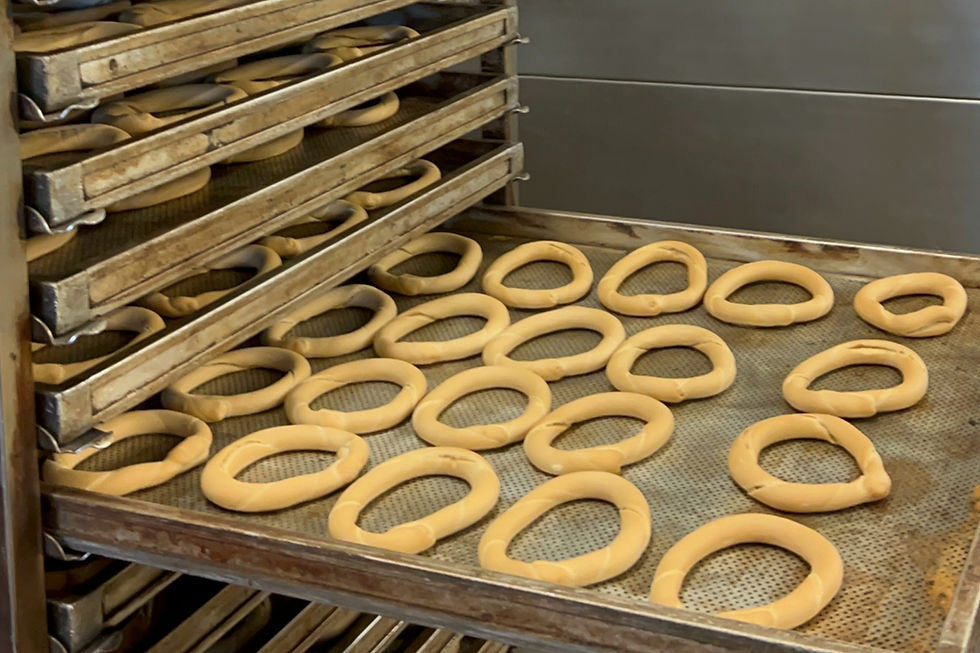
The bossolà is a dry, ring-shaped bread biscuit made by hand from just four ingredients: flour, yeast, water, and salt. The name comes from the Venetian word imbossolare, which means to roll or wrap, a nod to its coiled shape. And that shape actually has a practical origin.
The bossolà has been around for a very long time. It shows up in written records from 1644, when a document from a pastoral visit to the monastery of San Francesco in Chioggia mentions nuns making buzzolai for the convent at Christmas and Easter. But the tradition goes back even further, to the time of the Republic of Venice, and the recipe has stayed pretty much the same ever since.
It was originally the bread of Chioggia's fishermen. Because it's dry, it doesn't go mouldy, which made it ideal for long fishing trips. Fishermen would bring it on the boat and hang it on the oarlock to dry out, keeping it good to eat for months at sea. The shape wasn't just aesthetic; it was functional.
These days the bossolà is still very much part of local life. You'll find it at restaurant tables alongside typical Chioggia dishes like sarde in saor or baccalà mantecato, but also at breakfast with a coffee, or just as a snack with some cheese.

If you're travelling around the Veneto, Chioggia is well worth a stop, and Manfredi & Bullo is a good reason to go. Pick up some turmeric crackers, try a bossolà, and if there's a ciosota cake available, you already know what to do.